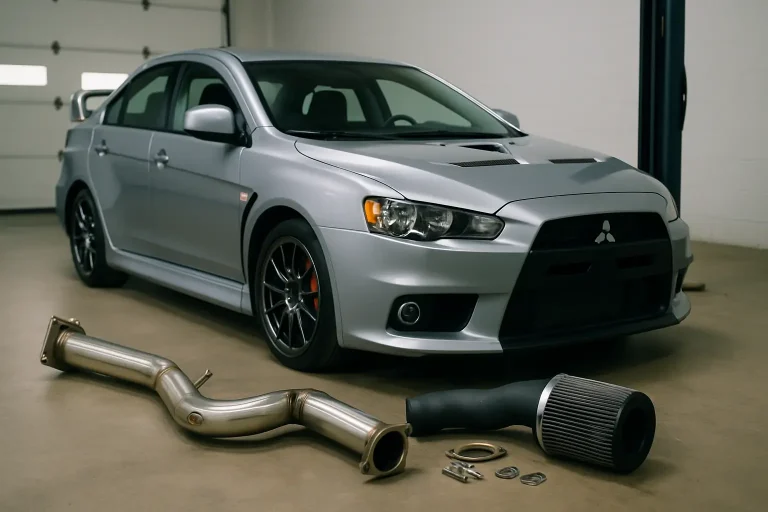

Evo 8 Shifter Bushings: The Upgrade That Works
You know the feeling: third gear is right there, but the lever does that extra little wobble before it clicks home. On an Evo 8, that slop isn’t “character” – it’s compliance from 20-year-old rubber and plastic doing exactly what they were designed to do: isolate noise and vibration for a new-car buyer. The problem is you’re not trying to impress a showroom. You’re trying to shift clean at redline, hit a downshift without hunting, and keep the drivetrain feeling tight.
A shifter bushing upgrade is one of the highest return-on-effort mods you can do on an Evo 8. It doesn’t add horsepower. It adds confidence – the kind you feel in every 2-3 pull and every heel-toe into a corner.
What “shifter bushings” actually fix on an Evo 8
The Evo 8 shifter system is a chain of parts, and the weakest link sets the feel. The lever in the cabin connects to cables, the cables connect to brackets and levers at the transmission, and every connection point uses bushings to control movement and isolate vibration.
When those bushings are soft, cracked, or simply too compliant, you get extra motion that isn’t moving the selector inside the trans. That’s why the shifter can feel vague even when the transmission is perfectly healthy.
The upgrade doesn’t change the geometry of the shift mechanism. It reduces deflection. Less deflection means the lever movement more directly translates to selector movement – tighter gates, more consistent engagement, and less “did it go in?” hesitation.
The best evo 8 shifter bushings upgrade depends on your goal
If you’re looking for one universal answer, here’s the honest take: it depends on what you can tolerate in NVH (noise, vibration, harshness) and how you use the car. The “best evo 8 shifter bushings upgrade” for a street-driven weekend car isn’t always the same as for a track-only Evo with solid mounts.
Most Evo 8 bushing upgrades fall into three material categories: upgraded rubber, polyurethane, and solid metal (usually aluminum). Each one pushes the needle on precision vs comfort.
Upgraded rubber: the OEM-plus move
Upgraded rubber is for owners who want the car to feel newer, not necessarily harsher. Think of it as restoring crispness without turning the cabin into a vibration amplifier.
If your Evo is a daily driver, you road trip it, or you’re already sensitive to drivetrain noise, upgraded rubber is a smart play. You’ll feel less slop and better centering without adding much buzz through the knob.
The trade-off is that rubber still deflects. It’s better rubber, not zero-compliance hardware. For many people, that’s the point.
Polyurethane: the sweet spot for most street and track builds
Poly bushings are the most common answer because they’re a strong middle ground. They reduce compliance a lot more than rubber, they’re durable, and they don’t transmit as much harshness as solid metal.
On an Evo 8 with typical bolt-ons and spirited driving, polyurethane is usually the best value. You get a noticeably tighter gate and a more mechanical feel without making the car feel broken-in-the-wrong-way.
The trade-off is some added feedback. Depending on your motor mounts, exhaust, and interior setup, you may notice more drivetrain vibration through the shifter at idle or during decel. Some owners love that “connected” feel. Some don’t.
Solid aluminum: maximum precision, maximum honesty
Solid bushings are for drivers who want the shifter to feel like it’s bolted to the gearbox – because it basically is. If you’re running stiffer mounts, a more aggressive clutch, or you’re chasing consistency on track, solid bushings can make shifts feel exceptionally direct.
The trade-off is NVH. Aluminum doesn’t absorb. It transmits. You’re more likely to get buzz, gear noise, and a sharper sensation through the lever, especially if the rest of the drivetrain has been stiffened.
If you’re building a street car that you want to feel refined, solid bushings might be “too much.” If you’re building an Evo that you want to feel race-ready, they can be exactly right.
Where to upgrade: shifter base vs cable ends
Not all “shifter bushing” kits hit the same spots, and that’s where a lot of wasted money happens.
Shifter base bushings (in the cabin)
These support the shifter assembly under the center console. When they’re soft, the whole assembly can move slightly when you row through gears. Upgrading them tightens the overall feel and can improve the perceived gate definition.
If your shifter feels like it flexes as a unit, start here.
Shifter cable end bushings (at the transmission)
These are the bushings at the cable attachment points on the transmission bracket and selector levers. They matter because they’re at the business end of the system. Replacing squishy cable end bushings often delivers the most dramatic improvement in engagement clarity.
If your shifts feel vague right at the moment of engagement – like the lever reaches the gate but the gear doesn’t feel positively selected – cable end bushings are usually the move.
Doing both is how you get the “why didn’t I do this sooner” result
Base bushings tighten the platform. Cable end bushings tighten the actuation. When you do both, the whole system stops wasting motion.
If your Evo 8 is still on original bushings, doing both areas in one shot is the closest thing to resetting the shifter to a modern, precise feel.
Fitment and compatibility: don’t guess with Evo 7-9 parts
Evo 7-9 cars share a lot, but bushing kits can still vary by design, bracket style, and what’s included. Some kits only address two points. Others include multiple locations and hardware. Before you call something “best,” confirm it matches what you’re actually upgrading.
Also consider the rest of your setup. A short shifter reduces throw by changing leverage. That can feel great, but it can also increase the effort and amplify any remaining compliance. Pairing a short shifter with fresh bushings is a common combo because it keeps the reduced throw from feeling notchy or inconsistent.
And if you’re chasing a “perfect” shift, be real about the other variables. Worn shifter cables, a tired clutch hydraulic system, incorrect clutch pedal adjustment, or old transmission fluid can all show up as shift quality issues. Bushings fix slop, not grind.
NVH reality check: what you’ll feel after the upgrade
Most Evo owners ask the same question: “Will it rattle?” The honest answer is that tighter bushings don’t create problems, they reveal them.
If your car already has stiffer engine and trans mounts, you’re already transmitting more vibration into the chassis. A bushing upgrade will make the shifter a more direct pathway for that vibration, especially with solid metal.
If your interior has missing console clips, a loose trim panel, or an aging shift knob insert, the new crispness can make those minor issues more noticeable. Fixing small interior rattles is part of making a tuned Evo feel dialed.
Installation expectations: DIY-friendly with the right mindset
A shifter bushing upgrade is a driveway job for most owners. The base bushings require pulling the center console and accessing the shifter assembly. Cable end bushings require access at the transmission side, usually from above with the intake piping out of the way or from below depending on your setup.
What matters is patience. Don’t force clips. Don’t hammer parts that should press in. Clean the mounting points and use the right grease if the kit calls for it, especially with polyurethane.
If you want the upgrade to feel “factory-tight,” torque hardware evenly, re-check for binding, and make sure the cables route cleanly without tension. A bushing upgrade should make the shifter smoother and more precise, not heavier because something is misaligned.
Picking the right setup for your Evo 8 build
For a daily-driven Evo 8 that still has rubber-ish mounts and you care about comfort, upgraded rubber or a mild poly kit is the safe bet. You’ll get a cleaner shift without turning every idle vibration into a message through your palm.
For the typical enthusiast Evo – intake, exhaust, tune, weekend canyon runs, occasional track day – polyurethane is the move. It’s the best blend of precision and livability, and it tends to stay consistent over time.
For a car with stiff mounts, aggressive clutch, and a driver who wants maximum mechanical connection, solid bushings can feel incredible. Just don’t act surprised when the car starts communicating more of what the drivetrain is doing.
If you want parts chosen by people who live in the Evo 7-10 world every day, Evo Motor Parts is built around that exact mindset: correct fitment, proven suppliers, and upgrades that make sense for real builds.
The upgrade that makes every drive feel sharper
A clean, precise shift doesn’t just make the car faster. It makes you drive it more. You take the longer way home. You stop babying second gear. You trust the 3-4 change when the car is loaded up mid-corner.
Do the bushings, choose the material that matches your tolerance for NVH, and then pay attention to what your Evo tells you afterward. A tighter shifter is often the first step toward a tighter car, because once you feel what “connected” really means, you’ll start hunting down every other place the chassis is wasting motion – and that’s where the fun builds live.