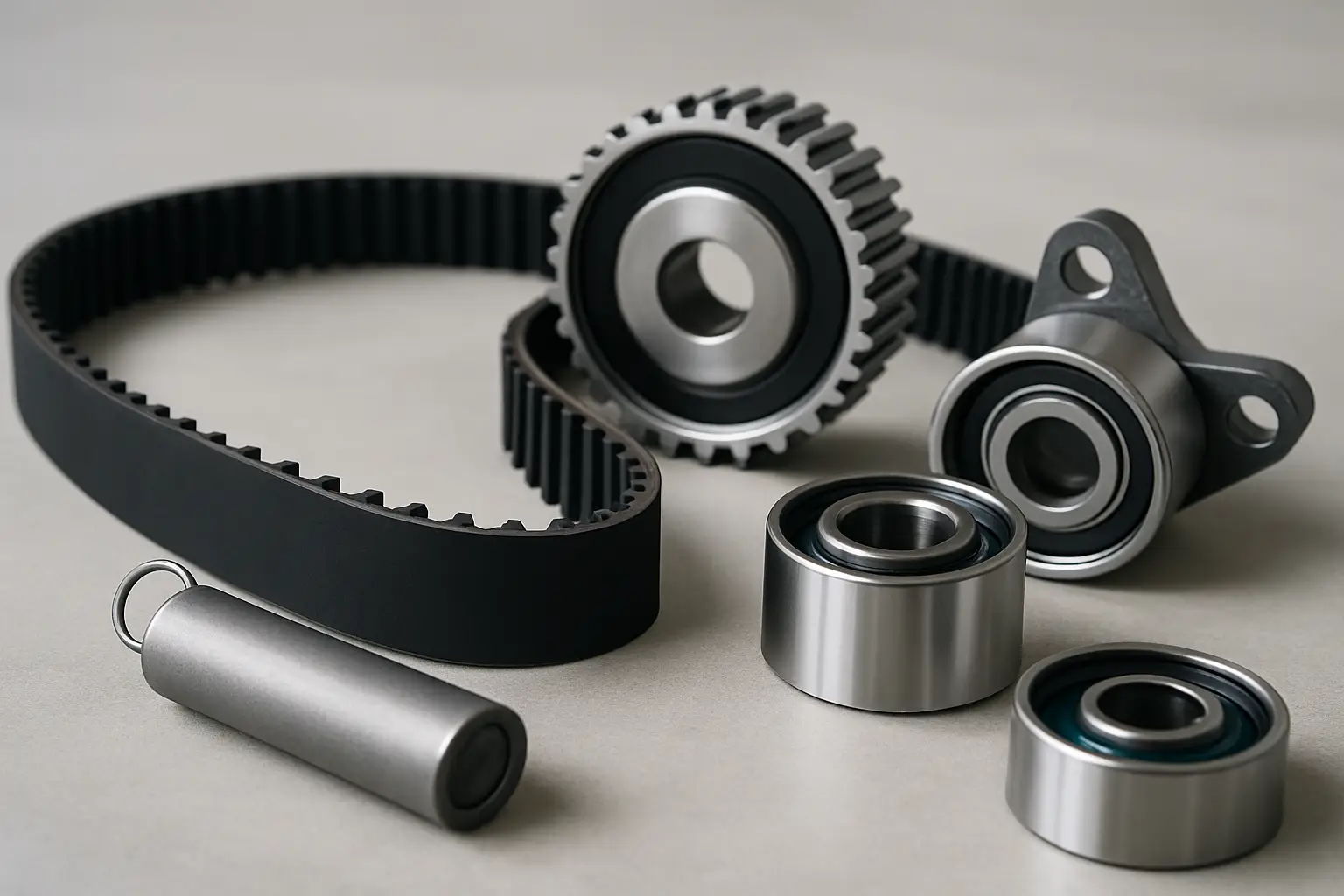
Best Evo 8 Timing Belt Kit: What Matters
You can feel an Evo 8 that’s in time. It idles clean, comes on boost the same way every pull, and doesn’t have that nagging “something’s off” vibration that makes you back out early. You can also feel the opposite – a timing system that’s been pieced together with mystery parts, questionable bearings, or a tensioner that can’t hold control once the engine is heat-soaked.
That’s why picking the best evo 8 timing belt kit is not a “grab whatever is on sale” decision. On a 4G63, timing components aren’t just maintenance items – they’re the chain of custody for your valves, pistons, and your whole season. The kit you choose should match how you use the car, how far you plan to push it, and how allergic you are to doing the job twice.
What “best” means on an Evo 8 timing kit
“Best” isn’t a single brand name for every build. It’s a combination of correct fitment, proven component quality, and the right scope of parts for your mileage and power level.
For most Evo 8 owners, best means OEM-level reliability with no shortcuts: a belt that holds length under heat cycles, idlers that don’t get noisy at 15k miles, and a hydraulic tensioner that maintains control when you’re bouncing limiter between shifts. For track-day cars, “best” also means repeatability – components that behave the same after a hot session as they do cold in the garage.
The trade-off is cost and planning. Higher-quality kits cost more up front, and the smart ones include parts you might be tempted to reuse. But the price of a second timing job (or a bent-valve mistake) is always higher than doing it right once.
The parts that separate a legit kit from a gamble
A timing belt kit can look complete on paper and still be a weak link in real life. On the Evo 8, the belt itself is only one piece of a system that depends on stable tension and smooth pulley rotation.
The timing belt itself
A quality belt maintains tooth shape, pitch accuracy, and tensile strength after years of heat and oil vapor. That matters because the 4G63 lives with frequent temperature swings, and a lot of cars in the community see higher-than-stock RPM.
If you’re stock turbo and daily driving, you still want an OEM-grade belt. If you’re running a bigger turbo, stiffer mounts, and higher revs, you want a belt with a reputation for staying dimensionally stable. The goal is not “stronger than needed,” it’s “predictable under abuse.”
Hydraulic auto tensioner
This is one of the most underappreciated pieces in the whole job. The hydraulic tensioner is what keeps the belt controlled when the engine is hot, the accessories are loaded, and you’re snapping throttle transitions.
A weak or inconsistent tensioner can show up as belt flutter, odd noises, or timing drift that’s hard to diagnose because it doesn’t fail the same way every time. If a kit cheaped out here, it’s not the best kit, period.
Tensioner pulley and idler pulleys
Pulley bearings are where “budget” kits usually show their true colors. You might get a belt that looks fine, but the bearings start to sing early, develop play, or seize. Any of those outcomes can ruin your day.
A good kit uses pulleys with proven bearing quality and proper seals. The point is long-term smooth rotation, not just “it spins when new.”
Water pump: include it or not?
On the Evo 8, most owners are better off replacing the water pump while you’re in there. Labor overlap is real, and a water pump failure can take out the belt or force you right back into the same job.
There are exceptions. If your pump is genuinely fresh, known-brand, and you have receipts with low mileage, you can justify skipping it. But if you’re working with unknown history, the best move is to bundle it. A kit that offers an OEM-quality pump option is usually the right direction.
Balance shaft belt: depends on your setup
If you still run balance shafts, replace the balance shaft belt with the timing service. It’s cheap insurance.
If you’ve deleted the balance shafts (common on higher-power builds), you obviously won’t need that belt – but you do need to make sure your overall kit matches your configuration. “Universal” kits that assume stock everything can be a bad fit for deleted-shaft engines unless the seller specifies what’s included and what isn’t.
How to choose the best evo 8 timing belt kit for your build
Here’s the decision process we use as Evo people, not generic catalog shoppers.
1) Start with your engine’s reality, not your goals
If the car is a fresh build with a known parts list and you control the maintenance schedule, you can choose a kit optimized for your use. If you just bought the car and the previous owner’s maintenance story is “should be fine,” you need a kit that resets the clock completely.
Unknown history pushes you toward a more complete kit: belt, tensioner, all pulleys, and usually the water pump.
2) Match the kit to RPM, heat, and usage
A daily driver that sees occasional pulls wants durability and quiet operation. A track car wants components that don’t change behavior at temperature. A drag car wants stability under repeated high-RPM hits. Those needs overlap, but they’re not identical.
If you regularly run higher RPM, don’t treat the tensioner and pulleys as “optional upgrades.” They’re the control system.
3) Don’t mix-and-match no-name bearings with premium belts
A common mistake is buying a respected belt and then pairing it with whichever pulleys are cheapest. The belt can only be as reliable as the rotating hardware guiding it.
The best kits feel boring because every component is from a supplier with a track record. No surprises, no “new brand to the market,” no weird casting marks on the pump, no bearings that feel dry out of the box.
4) Insist on correct fitment for the Evo 8 (4G63)
This sounds obvious, but misboxed parts happen. The Evo 7-9 family is close, but details matter, and some kits are assembled for multiple applications. A best-in-class kit is one that’s packaged and labeled for your exact chassis and engine.
If you’re shopping from an Evo-only specialist, that risk goes way down because the catalog isn’t trying to cover 40 platforms at once. That’s the whole point of buying from people who live in the Evo ecosystem, like Evo Motor Parts.
What a “complete” kit should include (most of the time)
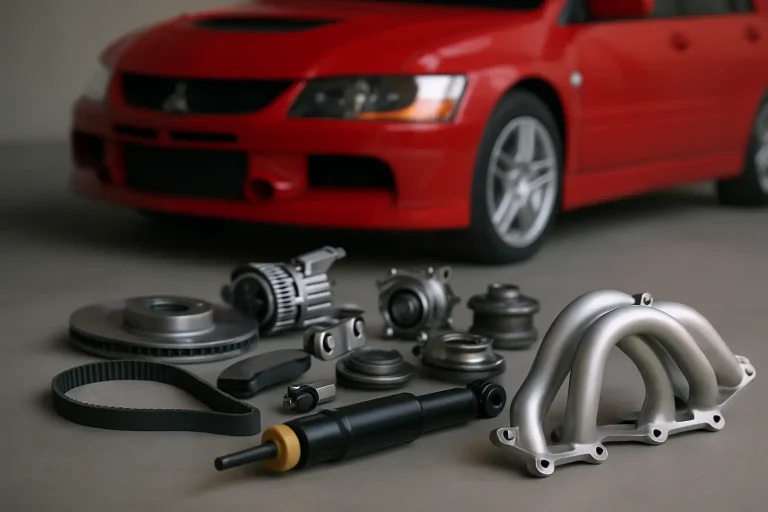
For the majority of Evo 8 owners doing a timing service at normal mileage intervals or with unknown history, a complete kit should include the timing belt, hydraulic tensioner, tensioner pulley, and idler pulleys. Adding an OEM-quality water pump is usually the right move unless you have a very recent pump with known provenance.
If you’re staying with balance shafts, include the balance shaft belt. If you’ve deleted them, make sure you’re not paying for parts you can’t use, and double-check that your setup is properly addressed during install.
Install reality: where great parts still get blamed
Even the best evo 8 timing belt kit can’t compensate for a sloppy install. The 4G63 is forgiving in some ways, but timing work is not one of them.
The tensioner pin procedure, correct torque on pulleys, and proper timing mark verification all matter. So does rotating the engine by hand and re-checking everything before you ever hit the starter. People also forget that oil leaks and coolant contamination shorten belt life fast – if your front seals are sweating, address it while access is open.
If you want the kit to last, treat the job like a precision assembly, not a Saturday thrash. Your future self will thank you every time the car lights off clean.
The smart way to spend your money
If you’re choosing between “cheaper kit now” and “quality kit once,” the Evo tax is real: these cars reward you when you buy proven parts. Spending more for a kit with an OEM-grade tensioner and high-quality pulleys is usually the best performance-per-dollar decision you can make, because it protects every other engine mod you’ve paid for.
If budget is tight, prioritize the tensioner and pulleys over cosmetic extras. A fancy box doesn’t keep valves off pistons.
Closing thought: if you want your Evo 8 to feel confident at full pull, start by making sure the crank and cams stay exactly where you told them to – every heat cycle, every gear, every time you turn the key.