Evo 8 Coil Pack Upgrade That Actually Works
That split-second breakup at the top of third gear feels like a fuel cut, but it is usually ignition. On an Evo 8 that sees real boost, the coil packs are either doing their job or quietly falling behind – and once they fall behind, the logs get messy, plugs look weird, and power gets inconsistent run to run.
An evo 8 ignition coil pack upgrade is not a magic horsepower button. It is a reliability and consistency move for the right build. Done for the right reason, it cleans up high-load misfire, makes the car easier to tune, and keeps spark energy stable when cylinder pressure climbs. Done for the wrong reason, it is just expensive troubleshooting.
When an evo 8 ignition coil pack upgrade is worth it
Ignition demand goes up as cylinder pressure goes up. That is why a stock-ish Evo 8 can run for years on healthy OEM coils, while a car on a bigger turbo, more boost, or ethanol starts exposing weaknesses.
If your car is lightly modded and healthy, new OEM-style coils and fresh plugs often solve the problem. The upgrade conversation starts when you are pushing the car hard or you keep chasing misfire that is not explained by plugs, gaps, or obvious wiring faults.
The most common “this is ignition” situations we see on Evo 8 builds are high-RPM breakup under boost, misfire counts that spike only at high load, and a car that runs clean on pump gas but starts to act up on E85 once you tighten things up and lean on timing. Ethanol itself is not the villain – it just encourages higher boost and more aggressive setups, which raise the ignition requirement.
Heat and age matter too. Coils live in a rough spot, and a 15-plus-year-old set can be “fine” until you actually ask for consistent spark at 25-35 psi.
Coil packs, dwell, and why “stronger spark” is complicated
A coil is basically an energy storage device. The ECU controls how long it charges the coil (dwell), then releases that energy as a high-voltage event at the plug. If dwell is too short for the coil, you get weak spark. If dwell is too long, you overheat the coil and shorten its life.
That is why the best coil pack upgrade is not just “the one with the most marketing.” It is the one that matches your ECU strategy, wiring, and physical fitment – and has known dwell behavior.
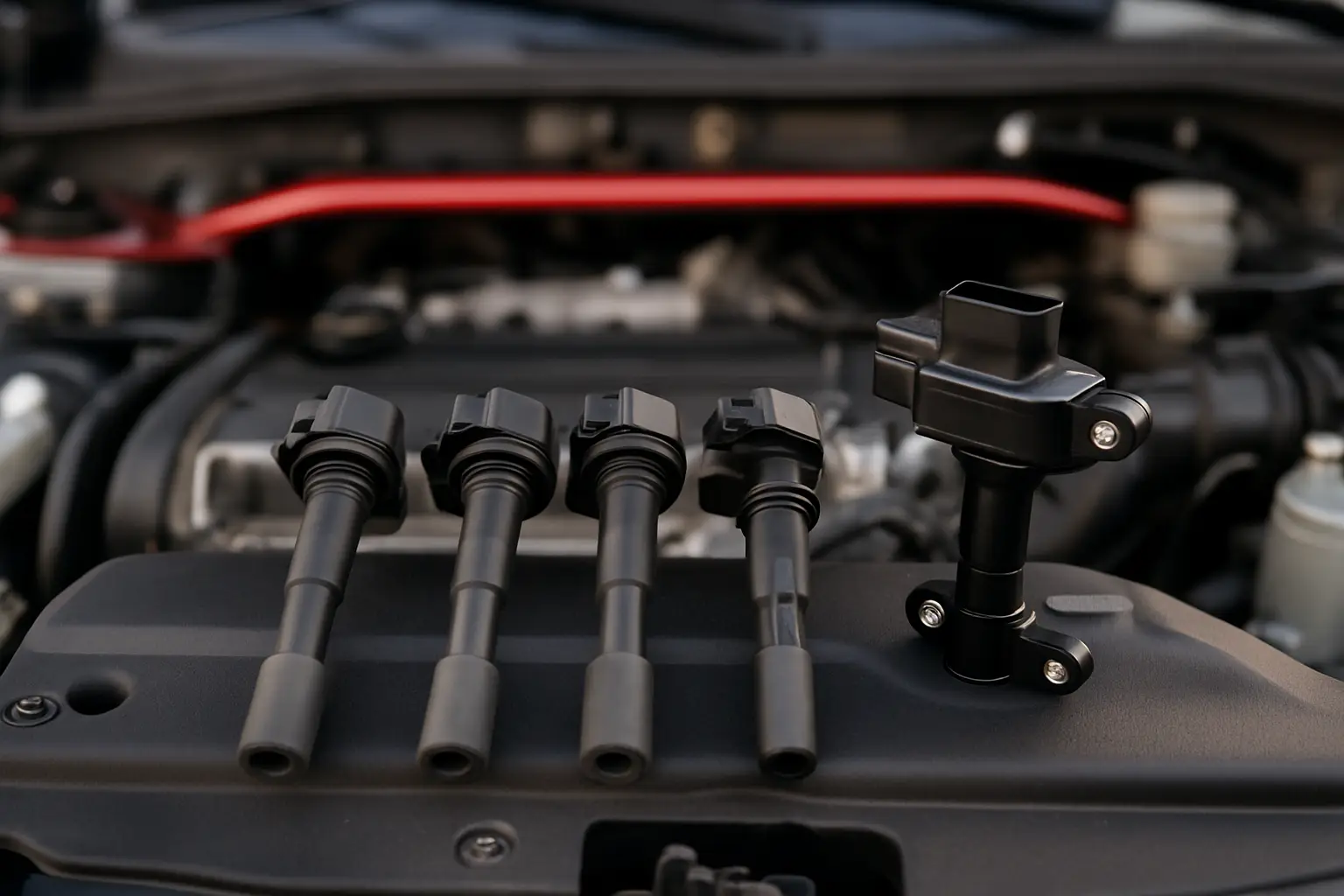
On the Evo 8, you are also dealing with a factory coil-on-plug layout that works well when everything is healthy. When it does not, you need to decide whether you want to stay OEM-style (simple, plug-and-play) or move to a more motorsport-style solution (more headroom, more variables).
Your upgrade paths (and the trade-offs)
There are three realistic directions for an Evo 8 owner.
1) Fresh OEM-style replacement coils
If your goal is factory drivability with track-day reliability, this is still the most underrated answer. New, high-quality replacement coils restore what the car was designed to do. Pair them with the right plugs and a sane gap and you can support a lot of power before you truly need to change the system.
The upside is zero fabrication, no harness adapters, and no tuning complexity. The downside is you are still in the OEM envelope – which is fine for most builds, but not all.
2) Higher-output “drop-in” coil options
Some aftermarket coils claim higher energy while keeping stock fitment. These can work well if they are genuinely engineered for the platform and not just reboxed. The key is not the claim – it is the data. If dwell requirements change and you do not account for it, you can chase new problems.
This path can be a nice middle ground: stock-like install with a bit more margin at high boost. The risk is inconsistency across brands and batches, so choose parts that Evo owners are actually running with repeatable results.
3) Coil conversion kits (common when power goals get serious)
When you are building for higher cylinder pressure – big turbo, aggressive boost curve, ethanol, or sustained track heat – a coil conversion can be the cleanest long-term solution. These setups typically use more modern coils with strong output and proven performance at high RPM.
The upside is headroom and stability. The trade-off is you are adding components: brackets, harness adapters, sometimes different connectors, and sometimes different dwell targets. This is not hard, but it is not “install and forget” unless you follow a known-good recipe.
Before you buy coils: eliminate the usual causes
Coil packs get blamed for problems that start elsewhere. If you want the upgrade to actually fix something, make sure you are not masking a basic issue.
Start with plugs. On turbo 4G63 setups, plug heat range and gap are everything. Too wide of a gap will show up as misfire under boost even with good coils. Too tight can hide other issues and hurt idle quality. There is no universal perfect gap – it depends on boost, fuel, and coil capability – but if you are getting breakup, tightening the gap slightly is a valid diagnostic step.
Next, check the simple stuff: coil connectors that are brittle, oil in the plug wells, damaged boots, and grounds. A tired ground path can make good coils look bad.
Then look at fuel and airflow. A lean spot under boost or an injector that is going non-linear can feel like ignition. Logs are your friend here. If misfire correlates with a clear AFR anomaly, fix fueling first.
Install tips that prevent “new coil” problems
Ignition upgrades fail most often because of small details. Coils are sensitive to mounting, heat, and electrical integrity.
Use dielectric grease sparingly where it makes sense, but do not drown the boots. Make sure plug wells are dry and clean. If you are on a conversion kit, route the harness away from heat and moving parts, and secure it so vibration does not turn into intermittent misfire.
Torque matters more than people think. Loose plugs can leak compression and mimic misfire. Over-torqued plugs can damage threads and create long-term headaches. Use the right socket, torque to spec for the plug and head material, and do it on a cool engine.
If you change coil type, do not assume the ECU settings are automatically ideal. A coil that wants different dwell can work “fine” at idle and cruise, then fall apart at WOT when duty cycle climbs.
Tuning and logging: how to know the upgrade worked
You are not looking for a dyno graph miracle. You are looking for repeatability.
A successful evo 8 ignition coil pack upgrade shows up as clean pulls where misfire counts stay low, timing stays stable, and the car does not develop that high-RPM stutter as intake temps rise. If you were previously forced to run an overly tight plug gap to keep it together, you may be able to open the gap slightly for better idle and part-throttle response. That is a quality-of-life win, not a flex.
If you are running aftermarket engine management or a custom tune, talk to your tuner about dwell strategy before you swap parts. Some tuners will ask what coils you are using for a reason. The goal is to charge the coil enough to get strong spark at high load without cooking it.
Common scenarios and the best move
If your Evo 8 is a daily driver with basic bolt-ons and you just want it to feel crisp again, new OEM-style coils plus the right plugs will usually get you there.
If you are on E85 with a moderate turbo and you are fighting high-boost breakup, a proven higher-output coil option or a well-known conversion kit can be the difference between “it kind of runs” and “it repeats.”
If you are pushing the car hard at the track, heat soak and sustained RPM change the equation. That is where stability matters most, and where spending for a known ignition solution makes sense.
If you want help matching coils, plugs, and the rest of your setup without guessing, this is exactly the kind of Evo-only problem we build around at Evo Motor Parts.
The real goal: spark you do not have to think about
Ignition is not the glamorous part of an Evo build, but it is the part that decides whether your tune is trustworthy. When the spark is stable, everything else gets easier – fueling changes are clearer, knock response makes more sense, and the car feels like one cohesive machine instead of a collection of parts.
If you are considering an Evo 8 coil pack upgrade, make the decision based on your boost, fuel, and how you actually drive the car. Get the basics right, pick a proven path, and aim for the kind of reliability that lets you focus on the next corner instead of the next misfire.