
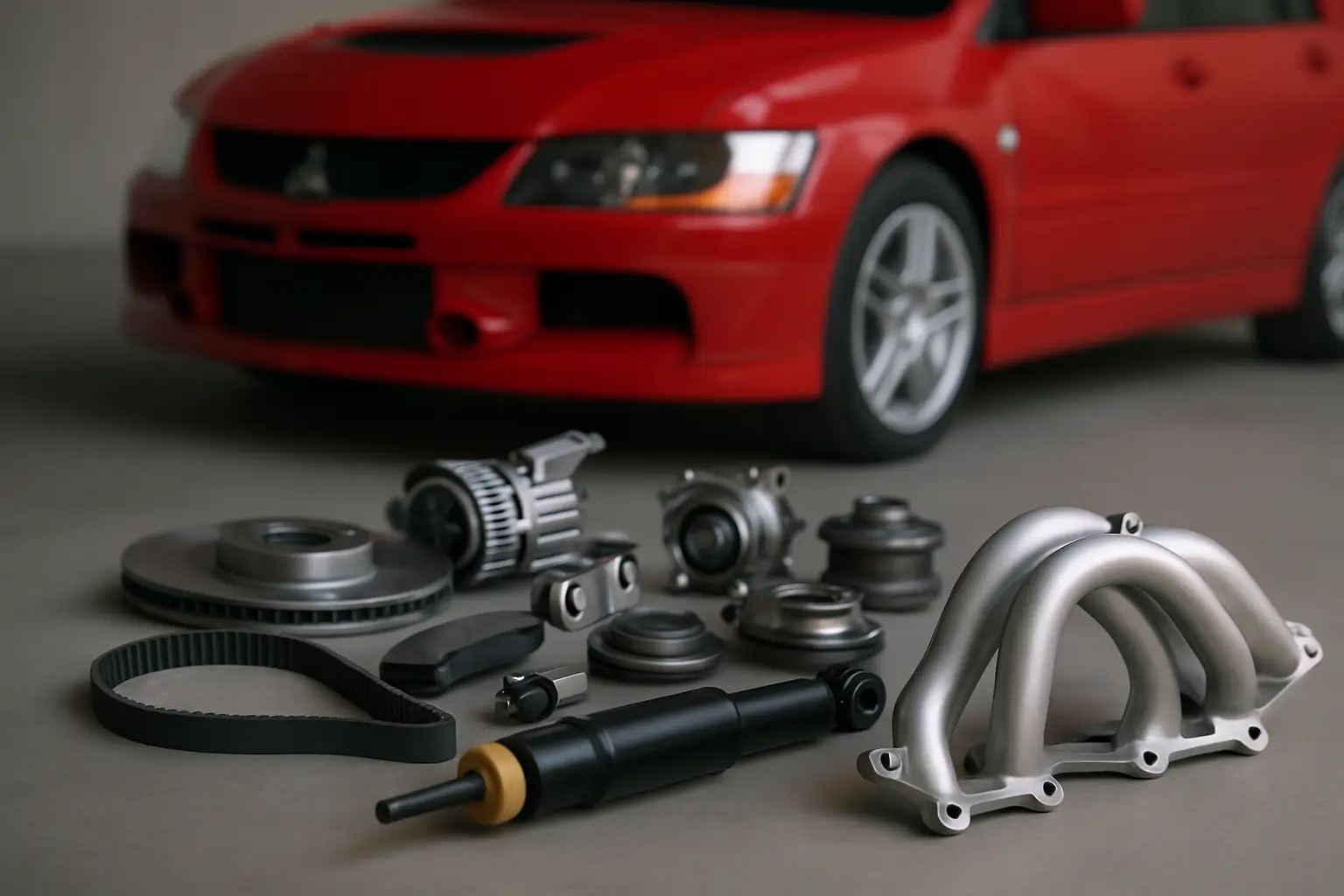
Evo 8 OEM Parts: Buy Once, Fit Right
You don’t notice how “OEM” your Evo 8 is until a cheap part forces you to notice. It’s the thermostat that sticks half-closed and makes coolant temps creep on a pull. It’s the axle seal that weeps onto the downpipe and turns your garage into an oil-scented warning light. It’s the window switch that works… if you press it like you’re entering a cheat code.
If you’re hunting mitsubishi evo 8 oem replacement parts, you’re probably not trying to reinvent the car—you’re trying to get your VIII back to the kind of reliable, repeatable performance Mitsubishi engineered into it. And on the 4G63/CT9A platform, “close enough” fitment isn’t close at all.
Why Evo 8 OEM replacement parts still matter
The Evo 8 sits in a sweet spot: old enough that wear items are catching up, but modern enough that the car punishes sloppy component choices. OEM replacement parts matter for one simple reason—systems. The Evo isn’t a collection of random pieces; it’s a set of interdependent systems built around tight tolerances, known sensor scaling, and predictable mechanical behavior.
When you go OEM on the right components, you’re paying for correct geometry, correct materials, and correct calibration. That shows up in boring ways (no leaks, no drivability issues, no mystery vibrations) that turn into exciting results (consistent boost response, stable temps, repeatable lap after lap).
The trade-off is real: OEM can cost more and sometimes the “best” answer is a proven aftermarket upgrade. But if your goal is a car you can drive hard without constantly chasing gremlins, OEM is the baseline you build from.
Start with fitment: what “Evo 8” actually means
Before you buy anything, treat fitment like a checklist, not a guess. “Evo 8” can still hide a few landmines: production-year changes, JDM vs USDM differences, and prior-owner modifications that quietly change what your car needs.
The fastest way to avoid the wrong part is to confirm three things: your exact model year, whether you’re dealing with stock components or swapped parts (turbo, radiator, manifold, suspension arms), and any known revisions already installed. The Evo community is famous for mixing-and-matching parts across VII–IX, and that can be smart—until you order a sensor, hose, or bracket that only fits the original setup.
If you’re unsure, don’t gamble. Pull part numbers off the component when you can, check your VIN, and verify what’s physically on the car. That extra ten minutes saves you a weekend.
The OEM parts that fix the most common Evo 8 headaches
Not every part needs to be OEM. But some parts absolutely should be, because they control reliability, drivability, or fitment-critical sealing.
Cooling system: stop heat soak before it starts
Evo 8s run hot when cooling maintenance gets ignored, and once the system is compromised you’ll chase temps forever. OEM is your friend for thermostats, radiator caps, coolant hoses, and temperature sensors—anything that affects pressure and temperature control.
A thermostat that doesn’t open at the correct spec can make your car feel “fine” around town and then spike temps on a highway pull or a track session. The same goes for caps: incorrect pressure ratings or inconsistent sealing changes boiling point and can create intermittent overflow issues that look like a bigger problem.
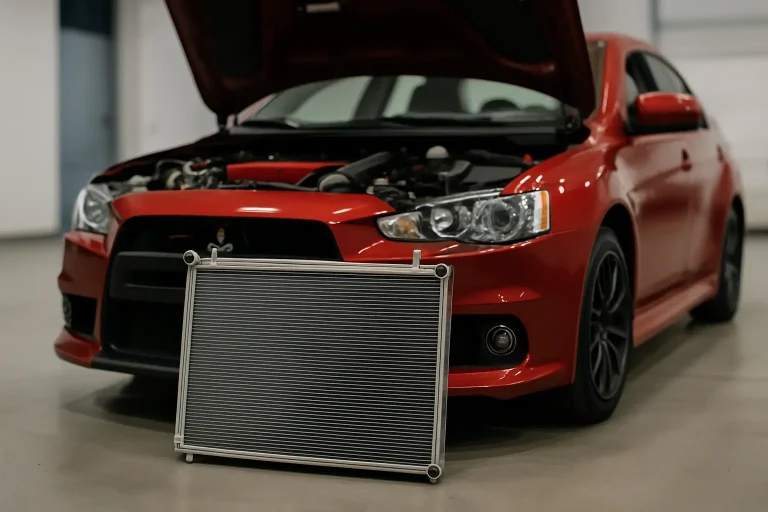
If you’re upgrading later (bigger radiator, fans, ducting), OEM replacement parts still matter because they bring the system back to a known-good baseline. Modding on top of a weak cooling system is how people end up blaming the turbo for what’s really a $30 problem.
Sensors and electronics: the fastest way to create a phantom tune issue
The Evo 8 ECU is sensitive to bad data, and aging sensors don’t always fail dramatically—they drift. That’s why OEM replacement makes sense for critical inputs like MAF, front O2, coolant temp, and crank/cam sensors. A sensor that’s “kind of working” can cause the exact kind of issues that waste the most time: inconsistent idle, weird fuel trims, random misfire codes, and hesitation that comes and goes.
Yes, some aftermarket sensors can work. The problem is consistency. If you’re chasing reliability and predictable tuning behavior, OEM-spec signal quality wins.
Vacuum and boost control lines: small leaks, big consequences
The 4G63 will tolerate a lot, but boost leaks and vacuum leaks mess with everything—spool, idle stability, AFR behavior, and how confident you feel leaning on the car.
Replacing cracked lines, brittle fittings, and worn gaskets with OEM-equivalent quality parts is one of those “cheap power” moves that isn’t really about power—it’s about restoring control. If the car doesn’t hold pressure, you’re tuning a moving target.
Seals, gaskets, and mounts: the unglamorous stuff that keeps the car together
Oil leaks and drivetrain slop don’t just make a mess; they change how the car behaves. OEM is often the right call for valve cover gaskets, cam seals, crank seals, and common leak points that rely on exact dimensions and materials.
Mounts are a “it depends” category. If your goal is a quiet daily that still handles business, OEM-style mounts keep NVH in check and maintain factory alignment under load. If you’re building a track-focused setup, aftermarket mounts may be worth it—but accept the trade: more vibration, more cabin noise, and sometimes more stress on adjacent components.
Suspension and steering wear items: restore the chassis, don’t just lower it
Evo 8 handling isn’t only about spring rates and coilovers. It’s about bushings, ball joints, tie rods, and proper alignment behavior under load. When those wear, the car starts doing “Evo stuff” you didn’t ask for: wandering at speed, uneven tire wear, and that vague front-end feel that makes you second-guess turn-in.
OEM replacement parts are a strong move when you’re restoring stock geometry and want predictable results. Aftermarket arms and links can add adjustability, which is great when you need it, but OEM-style components are hard to beat for plug-and-play fitment and longevity.
When aftermarket is smarter than OEM (and when it isn’t)
Being Evo-only doesn’t mean being OEM-only. The right answer depends on your goal.
If you’re staying near stock power and want factory-like manners, OEM replacement parts make your life easy. They fit, they behave, and they usually don’t introduce new variables.
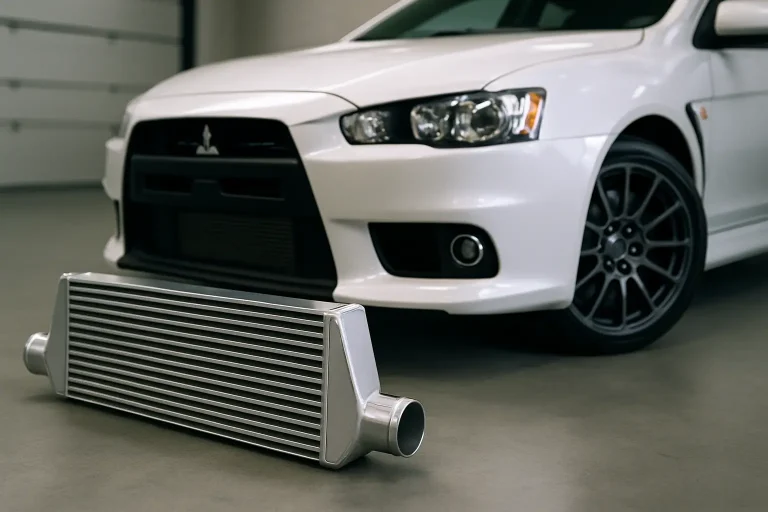
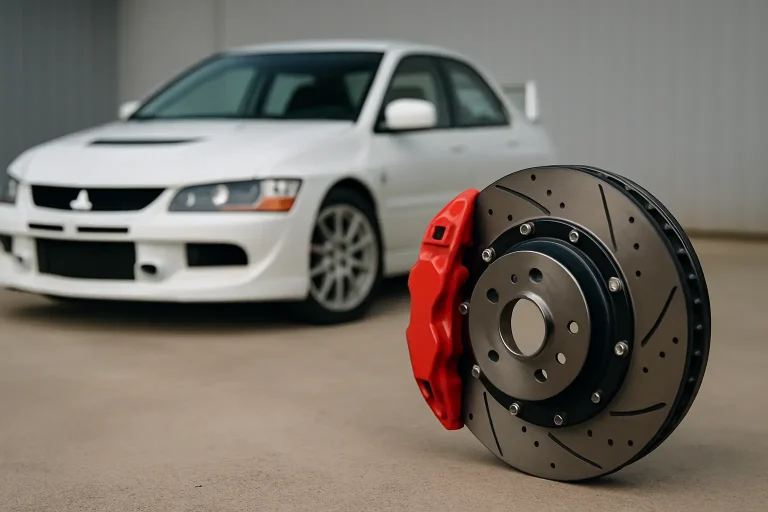
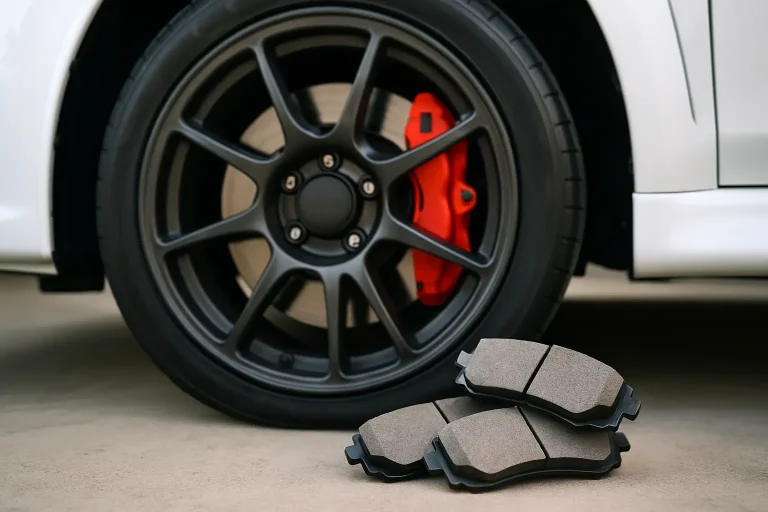
If you’re increasing boost, pushing track temps, or chasing lap consistency, certain upgrades are simply better than stock: improved intercooling, stronger clutch solutions, more capable brake pads/rotors, and modern boost control strategies. That doesn’t make OEM irrelevant—it means OEM becomes the foundation. You want the base car healthy first, then you upgrade with intent.
The mistake is mixing “budget aftermarket” into fitment-critical areas and then trying to tune or troubleshoot around it. Saving a few dollars on a part that controls temperature, pressure, or ECU inputs is one of the most expensive ways to “save money.”
How to buy Evo 8 OEM replacement parts without wasting money
A smart buying strategy is less about hunting the lowest price and more about eliminating rework.
First, diagnose like an engineer. Confirm the failure mode and the root cause. A leaking gasket might be a warped surface or excessive crankcase pressure. A recurring misfire might be coil health, wiring, plugs, or a sensor input that’s lying. Replacing parts blindly is how you end up with a stack of “new” parts and the same problem.
Second, replace in logical groups when it makes sense. Cooling refreshes work better as a system: hoses, thermostat, cap, and fresh coolant. Vacuum leaks are best handled with a full inspection and refresh, not one line at a time as each one cracks.
Third, plan around access. If a seal is buried behind a timing service, do it while you’re in there. Labor time—your own or a shop’s—is where the real cost hides.
And finally, buy from people who live in the Evo ecosystem. The difference isn’t just inventory; it’s knowing what actually fits your chassis and what people are running successfully. If you want an Evo-only catalog that mixes OEM replacement components with tuner-proven upgrades, Evo Motor Parts is built for exactly that kind of no-guesswork shopping.
The Evo 8 “baseline build” mindset
A fast Evo that’s always broken isn’t fast—it’s a project. The baseline mindset is how you turn a 20-year-old performance car into something you can rely on.
Start with the parts that keep the car alive: cooling integrity, leak-free sealing, accurate sensors, solid ignition health, and tight suspension/steering wear items. Once the car is stable, upgrades become fun again because each change produces a clear result.
That’s the real win with Mitsubishi Evo 8 OEM replacement parts: you’re not chasing perfection, you’re restoring confidence. The best feeling isn’t a peak dyno number—it’s doing a third pull, a tenth lap, or a long highway run and realizing the car behaves exactly the same as it did the first time.
3 Comments