
Evo 8 OEM Restoration Parts Guide
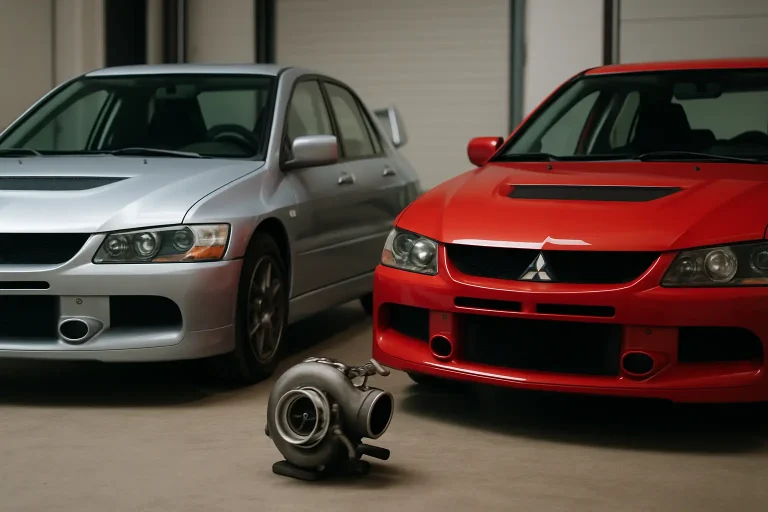
You can spot an Evo 8 that’s been “fixed” with whatever was cheapest. Panel gaps that don’t line up, a cooling system that’s always chasing temps, boost leaks that come and go, and suspension parts that clunk the minute you load the chassis. The VIII is old enough now that restoration is less about cosmetics and more about getting the car back to factory-level integrity – the kind that lets you drive it hard without babysitting it.
This evo 8 oem restoration parts guide is built for owners who want OEM fitment and reliability first, then upgrades only where they actually make the car stronger. Because the truth is simple: a clean build starts with tight basics. Once the foundation is right, every bolt-on you add works better.
What “OEM restoration” really means on an Evo 8
OEM restoration is not about keeping your car slow or stock. It’s about restoring Mitsubishi’s engineered baseline – sealing, cooling capacity, sensor accuracy, bushing compliance, and drivetrain alignment – so the 4G63 and AWD system can do their job.
For an Evo 8, “OEM” also comes with real trade-offs. Some factory rubber components were designed for comfort and NVH, not 20 years of heat cycles and track days. So the move is often OEM where fitment and calibration matter, and OEM-plus where longevity under load matters.
Start with a reality check: how the car will be used
Before you order anything, decide what the car needs to survive.
If it’s a mostly-stock street car, OEM is usually the shortest path to a quiet, tight, predictable Evo again. If it’s a weekend canyon car with occasional track time, you can still keep it OEM-looking while upgrading a few known weak points (cooling, mounts, bushings).
If it’s a high-boost setup, restoration parts become “systems parts.” A single brittle vacuum line or lazy O2 sensor can waste hours of tuning and create false problems.
Cooling system restoration: the fastest way to gain reliability
On the Evo 8, cooling issues are often blamed on the radiator, but the real failures stack up: tired hoses, weak caps, marginal thermostats, clogged cores, and fans that don’t move air like they used to.
A true OEM-style refresh means replacing wear items as a set. The radiator hoses and heater hoses matter because they’re exposed to constant heat cycling, and a small soft spot can turn into a balloon at 20+ psi of system pressure. Thermostats and radiator caps are cheap insurance, but only if you’re using known-good parts that open and hold pressure at the correct spec.
Water pumps are another “it depends.” If the timing is coming due, handle the pump while you’re in there. If the timing service is fresh and the pump is known quality, don’t open the system just to chase perfection.
If you’re restoring an Evo 8 that will see track temps, this is where OEM-plus makes sense: a higher-capacity radiator or better fans can keep coolant stable without changing the car’s character. Do it because you’re increasing margin, not because it looks cool.
Intake and boost control: restore sealing before you chase power
Boost leaks are the silent killer of clean drivability. They also trick people into buying turbos, injectors, and MAF housings when the real issue is a 50-cent crack.
For OEM restoration, focus on couplers, clamps, vacuum lines, and the bypass valve path. The Evo 8’s intercooler piping system is reliable when everything is tight, but age and prior “mods” can leave you with mismatched couplers and clamps that never quite seal. Replacing tired couplers and fixing routing back to factory spec often makes the car feel like it picked up power – because it stopped losing it.
Boost control solenoids and wastegate lines are another common pain point. If the car spikes, creeps, or feels inconsistent between gears, don’t assume it’s tune-related. Restore the plumbing, then verify the control hardware.
Fuel and ignition: OEM calibration matters here
This is the zone where OEM parts are usually the correct answer, even for modified cars. The ECU strategies on the Evo 8 assume certain sensor behaviors and ignition characteristics. When you throw in random alternatives, you can create misfires that only appear under load or in certain temperature ranges.
Spark plugs are straightforward – use the correct heat range for the power level, and don’t guess on gap. Coils and coil connectors should be inspected closely, especially if the car has lived near heat. If you’re chasing a ghost misfire, don’t ignore grounds and brittle connectors. The “part” might be a pigtail or terminal repair, not a major component.
Fuel pumps and injectors are where people blow the budget fast. If you’re restoring near-stock power, a fresh OEM-style pump and clean injectors can restore smoothness without turning the tune into a science project. If you’re building for power, do the upgrade intentionally and make sure the supporting pieces – filter, wiring health, and regulator – are just as solid.
Sensors and electronics: the difference between a clean tune and chaos
Evo 8s are sensitive to sensor integrity because the car is data-driven even in factory form. A tired front O2 sensor, a drifting MAF, or a lazy coolant temp sensor can make the ECU do the wrong thing with full confidence.
For restoration, prioritize sensors that directly affect fueling and timing. If the car has a rough idle, weird trims, or inconsistent boost behavior, don’t just swap parts until it improves. Log, confirm the failure mode, then replace with OEM-correct components. This is one of the biggest places where “cheap” parts waste time.
Also check the basics: battery health, alternator output, and chassis grounds. Voltage instability can look like tuning problems, misfires, or phantom CELs.
Timing and engine sealing: do it once, do it right
If you don’t have a documented timing belt service, assume you’re on borrowed time. The 4G63 is legendary, but it’s not immune to skipped timing and the aftermath.
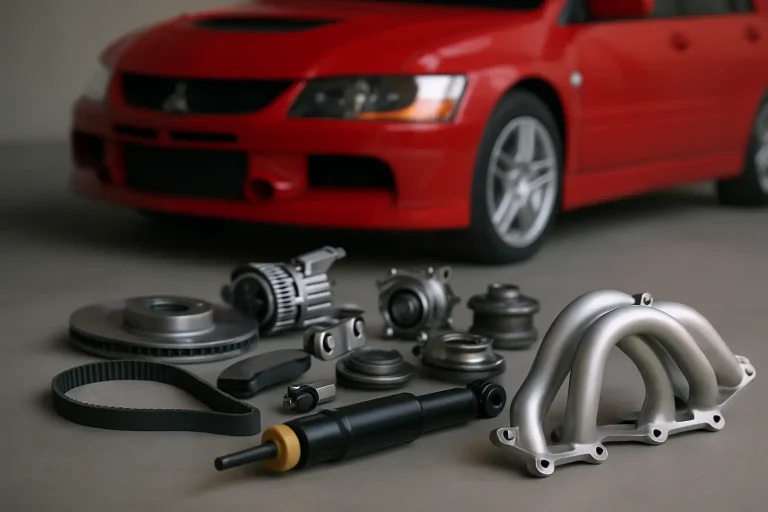
A proper restoration approach is to refresh the full timing service set, not only the belt. That typically means tensioner, pulleys, and related hardware that wears with the same cycles. If you’re already there, inspect cam and crank seals and address seepage. Oil leaks that drip onto mounts, belts, or the downpipe are not “character.” They’re future problems.
Valve cover gaskets and spark plug tube seals are another common restoration win. They’re not glamorous, but oil in plug wells can cause misfires and shorten coil life.
Drivetrain and AWD: restore alignment and feel
The Evo 8 feels special when the drivetrain is tight – clean engagement, predictable center diff behavior, and no weird clunks on throttle transitions.
Start with the clutch hydraulics and shifter components if the pedal feel or engagement point is inconsistent. A tired master or slave can mimic clutch wear.
Then look at mounts. OEM mounts restore factory refinement, but if you’re planning spirited use, a slightly stiffer OEM-plus mount setup can reduce drivetrain movement without turning the cabin into a vibration chamber. This is a taste decision. Daily drivers often prefer OEM softness. Track-focused cars benefit from reduced movement and improved shift consistency.
If you have transfer case or diff seepage, don’t ignore it. These systems last a long time when fluid stays where it belongs.
Suspension and steering: the “new car” feeling lives here
Most Evo 8s on the road now have tired bushings, cracked ball joint boots, and dampers that stopped damping years ago. You can add power all day, but if the chassis is loose, it won’t feel like an Evo.
For restoration-grade results, think in terms of geometry and compliance. Fresh tie rod ends, ball joints, and control arm bushings restore steering precision. New wheel bearings eliminate that vague, humming “normal for an old car” sound that masks real feedback.
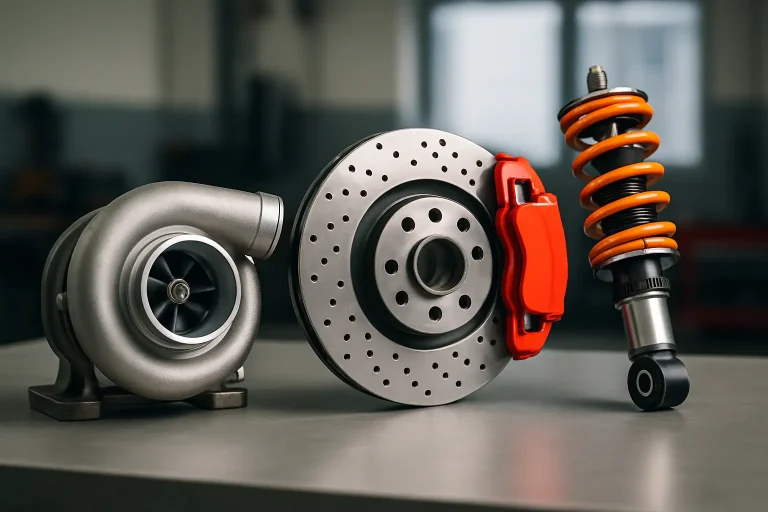
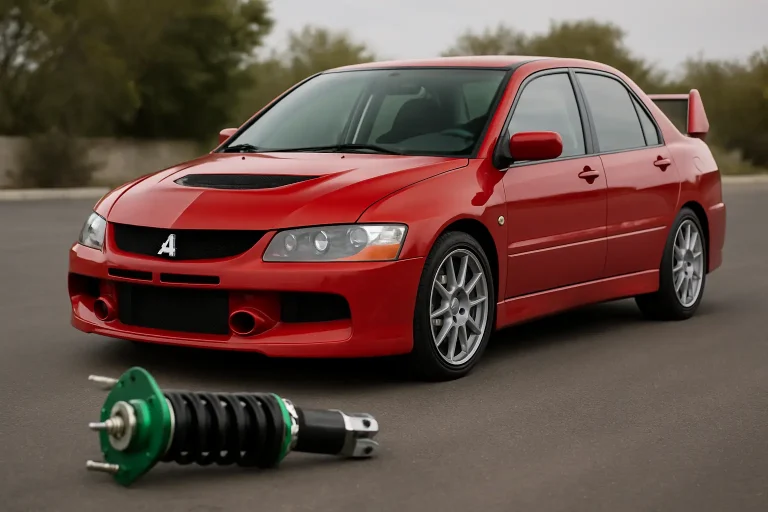
Struts are an “it depends.” If you want factory ride and response, an OEM-style damper is the move. If you’re building for track or aggressive street, quality coilovers can be worth it – but only if you’re ready to set them up correctly and maintain them. Cheap coilovers are a fast path to a bouncy, unpredictable car.
Brakes: restore confidence, then add capacity if needed
OEM braking on an Evo 8 is strong when it’s fresh. Most problems come from neglected maintenance: old fluid, glazed pads, warped rotors, and sticky calipers.
A restoration refresh typically means quality rotors, pads matched to your use, rebuilt calipers if needed, and fresh fluid. If you do spirited driving, fluid choice matters more than people admit. A firm pedal on lap three is worth more than a flashy part.
Stainless lines can be a smart OEM-plus upgrade for pedal feel, but they should be installed carefully and inspected regularly.
Exterior and interior OEM restoration: where fitment is everything
Evo 8 exterior restoration is usually about returning to proper fit and function: bumper hardware, undertrays, fender liners, seals, clips, and weatherstripping. These parts don’t add horsepower, but they stop rattles, keep water out, and protect the engine bay.
Inside, focus on what you touch: window regulators, door seals, shifter bushings, and HVAC controls. A clean interior is part of the Evo experience, especially if you’re trying to keep the car collector-clean without turning it into a garage queen.
Buying strategy: how to avoid redoing work
The biggest restoration mistake is ordering parts one symptom at a time. You end up paying shipping repeatedly, mixing part quality, and reopening systems.
Instead, build your plan by system. If you’re doing cooling, do the hoses, thermostat, and cap together. If you’re doing suspension, bundle wear items so the alignment happens once. If you’re chasing a drivability issue, verify it with data before you spend money.
And be honest about your goals. OEM restoration is a win when you want factory behavior back. OEM-plus is a win when you want factory behavior plus margin for heat, load, and abuse.
If you want Evo-only part selection that’s curated for fitment and real-world use, Evo Motor Parts is built around that exact mindset – tested, trusted components for Evo VII-IX and X, without the generic warehouse guesswork.
The restoration baseline that makes every upgrade better
An Evo 8 doesn’t need to be perfect to be fast. It needs to be consistent. When temps are stable, sensors read clean, bushings hold geometry, and the drivetrain isn’t flopping around, the car stops feeling like a project and starts feeling like a weapon again.
Pick one system this weekend, restore it properly, and then go drive the car hard enough to prove it. That’s how you earn confidence in the build – not by stacking parts, but by stacking proof.