Walbro 255 on an Evo 9: Worth It?
If your Evo 9 starts leaning out at the top of third gear, you feel it in your gut before you ever see it on a wideband. The car pulls hard, then it goes flat – like someone pinched the fuel line. For a lot of 4G63 setups, that moment is where the “stock pump is fine” conversation ends and the Walbro 255 enters the chat.
This is a Walbro 255 fuel pump Evo 9 review the way most of us actually experience the part: not as a spec sheet, but as a fix for fuel pressure drop, injector duty cycle stress, and the nagging fear of running your favorite motor lean when the boost is doing exactly what you asked it to do.
Walbro 255 fuel pump Evo 9 review: what it really changes
On an Evo 9, the fuel pump upgrade is less about chasing a number and more about stabilizing the whole fuel system under load. The factory pump can support a healthy amount of power on a conservative tune, but once you turn the 4G63 into a sustained high-load problem (bigger turbo, higher boost, track sessions, ethanol blends), the pump becomes the bottleneck that shows up as falling fuel pressure and rising IDC.
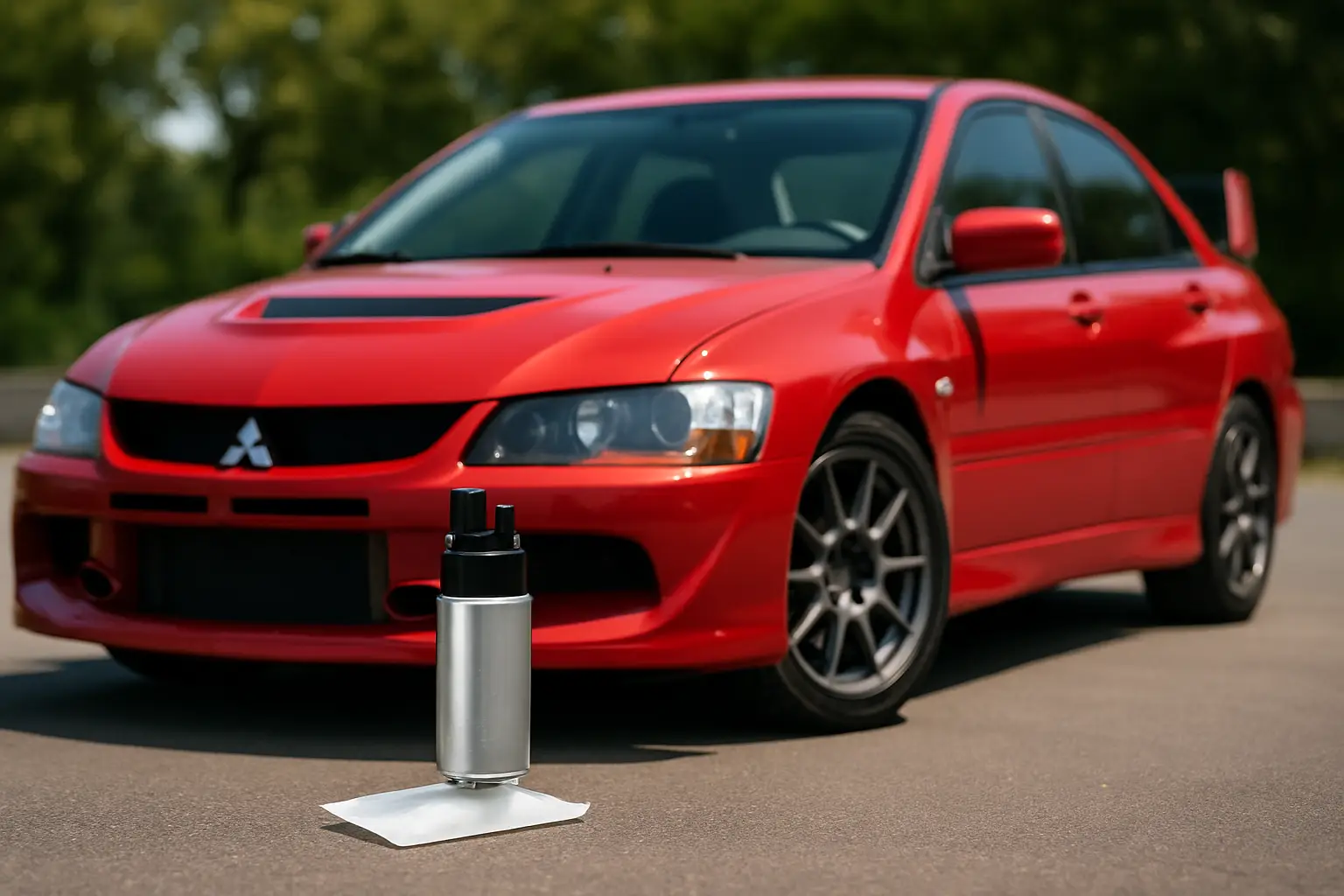
A Walbro 255 (commonly the GSS342 style in-tank pump) is popular because it’s a proven jump in flow capability without turning the install into a full custom fuel cell project. When it’s working with the rest of the system, it gives you margin – and margin is what keeps ringlands, pistons, and head gaskets from becoming “content.”
The trade-off is that the Walbro 255 isn’t a magic wand. It changes the system enough that you need to think about the fuel pressure regulator, wiring health, and your actual fuel goals. If you bolt it in and assume the ECU will forgive everything, you can create new issues while trying to solve an old one.
Fitment on an Evo 9: bolt-in, but not zero-effort
Physically, the 255 is close to a bolt-in for the Evo 9 hanger assembly, but “close” matters here. You’re dealing with the in-tank module, a sock filter, short submersible hose, clamps, and the electrical connector. Most of the frustration people associate with this install isn’t the pump itself – it’s rushing the little details.
The two fitment points that tend to make or break a clean install are pump orientation and the condition of the in-tank wiring and hose. If the short hose is old or you use the wrong hose type, it can soften or split in fuel. If the sock filter is installed at a weird angle or the pump is clocked wrong, you can create pickup issues when the tank is low and you’re pulling lateral Gs.
Also, the Evo 9’s pump hanger isn’t the place to get creative with cheap clamps. You want secure clamping force without cutting into the hose, and you want everything sitting naturally so the assembly drops into the tank without forcing it.
Fuel pressure behavior: where the 255 can bite you
The Walbro 255 flows enough that it can expose weaknesses in the rest of the Evo 9 fuel system. The classic issue is overrun with the stock fuel pressure regulator (FPR). When the pump can supply more volume than the regulator can bypass at idle and cruise, base fuel pressure can creep up.
What that looks like in real life: the car runs richer than expected at idle and part throttle, trims get weird, and you end up chasing “tuning” that’s actually hardware. Some cars get away with it, especially if the stock regulator is healthy and the rest of the system isn’t restrictive. Some don’t.
If your plan is a straightforward pump upgrade on pump gas with modest power goals, you might be fine on the factory FPR. If you’re stepping into bigger injectors, higher base pressure, ethanol, or you want consistent control across the entire map, an aftermarket adjustable FPR becomes less of a nice-to-have and more of a correctness item.
The key is measurement. Don’t guess. Verify base pressure with the vacuum line off, check pressure response under boost (1:1 rise), and watch what the car does after heat soak. That’s how you decide whether the system is regulating cleanly.
Wiring and voltage: the hidden limiter
Fuel pumps don’t run on hope. They run on voltage.
A Walbro 255 will move fuel, but it’s still sensitive to voltage drop. On a 20-year-old Evo 9, the wiring path, grounds, and pump connector can be tired. If the pump is seeing low voltage at the hanger, you may not get the flow you think you bought, especially at high load when you need it most.
This is why so many experienced Evo owners pair a higher-flow pump with a relay-based rewire or at least a hard look at the electrical side. You’re not doing it for internet points. You’re doing it so the pump performs like it should when the alternator is hot, the fans are on, and you’re holding it at 6,500 rpm.
If your logs show lean-out at the top end even after the pump, don’t immediately blame the tune. Confirm pressure under load and confirm voltage at the pump. It’s basic, and it saves engines.
Noise and drivability: yes, you’ll probably hear it
The Walbro 255 has a reputation for being louder than stock. On an Evo 9 with a typical enthusiast setup (less sound deadening than a Camry, stiffer mounts, louder exhaust), you’ll usually hear a faint whine, especially with the rear seat area quiet and the tank level lower.
Some owners don’t care at all. Others hate it on a daily.
Noise isn’t automatically a sign of a problem, but a sudden change in sound can be. If it gets noticeably louder over time, or the tone changes under load, that’s a reason to check the sock, inspect for restriction, and verify that the pump isn’t cavitating from low fuel level or a pickup issue.
Power goals: when the 255 is the right move
For a lot of Evo 9 builds, the Walbro 255 lands in the sweet spot for “enough pump to stop worrying” without overspending. It’s a common match for typical bolt-on-to-big-turbo progressions where you’re not trying to reinvent the fuel system from scratch.
It makes the most sense when you’re:
- Upgrading turbo and planning to lean on the car in the mid to upper rpm range
- Moving to higher-flow injectors and want fuel pressure stability
- Running ethanol blends where fuel demand climbs fast
- Tracking the car, where sustained load exposes weak fuel delivery
It can be overkill if your Evo 9 is a near-stock daily that’s never seeing sustained boost or hot laps. In that case, a fresh OEM-style pump may restore reliability and keep noise down, and you avoid pushing the stock regulator into questionable territory.
The honest answer is it depends on your use case, not your ego. A fuel pump should match the build, not the comment section.
Tuning considerations: what changes after install
A pump alone doesn’t “need a tune” in the way injectors or a MAF change does, but it can change how the car behaves if fuel pressure shifts. If base fuel pressure creeps, the ECU will compensate within limits, but you can end up masking a mechanical problem with trims.
If you’re already tuned on larger injectors, you should treat a pump change as a reason to re-check everything. Confirm base pressure, confirm injector scaling still matches reality, and make sure your WOT air-fuel and knock behavior are unchanged. On an Evo 9, this is especially important because a lot of cars are tuned aggressively enough that small fuel delivery changes show up as knock sensitivity.
And if you’re planning to install the 255 because you’re about to turn the boost up, install first, verify pressure and voltage, then tune. Don’t do it backward.
Reliability: proven, but authenticity matters
Walbro 255 pumps have earned their place in the Evo world because they generally survive real use – heat, vibration, and years of hard pulls. But reliability also depends on getting the real thing and installing it correctly.
The market has seen plenty of counterfeit or questionable pumps that look right until they don’t. A failing pump doesn’t just leave you stranded. On a turbo 4G63, it can also leave you with a lean condition at the exact moment cylinder pressure is highest.
If you’re buying parts for an Evo 7-9 build and you want fitment and authenticity handled by people who live in this platform, that’s the whole point of shopping Evo-only specialists like Evo Motor Parts.
So, is the Walbro 255 a good Evo 9 upgrade?
If your Evo 9 is moving beyond stock fueling demand, the Walbro 255 is still one of the most proven “do it once” upgrades in the community. It’s not exotic, and that’s why it works. The pump gives you the headroom your tune and turbo setup will eventually ask for, and it’s supported by a long track record of real-world installs.
Just treat it like a system change, not a single part. Check your regulator behavior, respect wiring and voltage, and verify fuel pressure under load. When you do, the 255 stops being a forum cliché and becomes what it’s supposed to be – cheap insurance for a motor you actually care about.
Build the car so it stays fun at full throttle, not just fast on a dyno sheet.